
Exactly what happens, so that nothing surprises you.
Most families have never done this before, and not knowing what is coming makes an already hard day harder. Here is the whole visit, honestly, from the phone call to the days afterwards.
Before the visit
When you call, we will talk about your pet and about what you want the day to look like. We will agree on a time, and you will know the full cost before we arrive. Nothing is added afterwards.
Think about where you would like it to happen. A favourite bed, the couch, the shade of a particular tree. Somewhere you will still be comfortable using afterwards. Old towels or a blanket underneath are wise. Please decide who will be there, and know that there is no wrong answer.
When we arrive
Dr. Atkinson-Spinks arrives quietly and without a uniform. There is no rush. We sit down first, meet your pet on their terms, complete the paperwork and the payment at the start so that the end of the visit is not about administration, and answer anything you want to ask.
Your pet does not need to be restrained, moved or lifted onto anything. Wherever they are is where we will work.
The two steps.
In-home euthanasia is done in two separate stages, with as long as you want in between them.
First, deep sedation
A small injection under the skin, similar to a vaccination. Most pets barely notice it. Over the next five to fifteen minutes they become drowsy, then fall into a sleep deep enough that they can no longer feel pain, fear or anything else.
This is the part families tell us they are most grateful for. You will often see your pet relax more completely than they have in months. You can hold them, talk to them, feed them something they were never allowed, and take as long as you need.
Then, the final injection
Only when you say you are ready. An overdose of anesthetic is given into a vein, and it works within seconds. Your pet is already deeply asleep and does not feel it. Dr. Atkinson-Spinks will listen to the heart and tell you gently when it has stopped.
You may see a last deep breath, some muscle twitching, or a release of the bladder or bowel. The eyes usually stay open. These are reflexes in a body that is no longer aware. They are normal, and they are not distress.
You are in charge of the pace. You can stay for all of it, step out for any part of it, or change your mind about anything at any point. Nobody will think less of you. This is your goodbye, not ours.
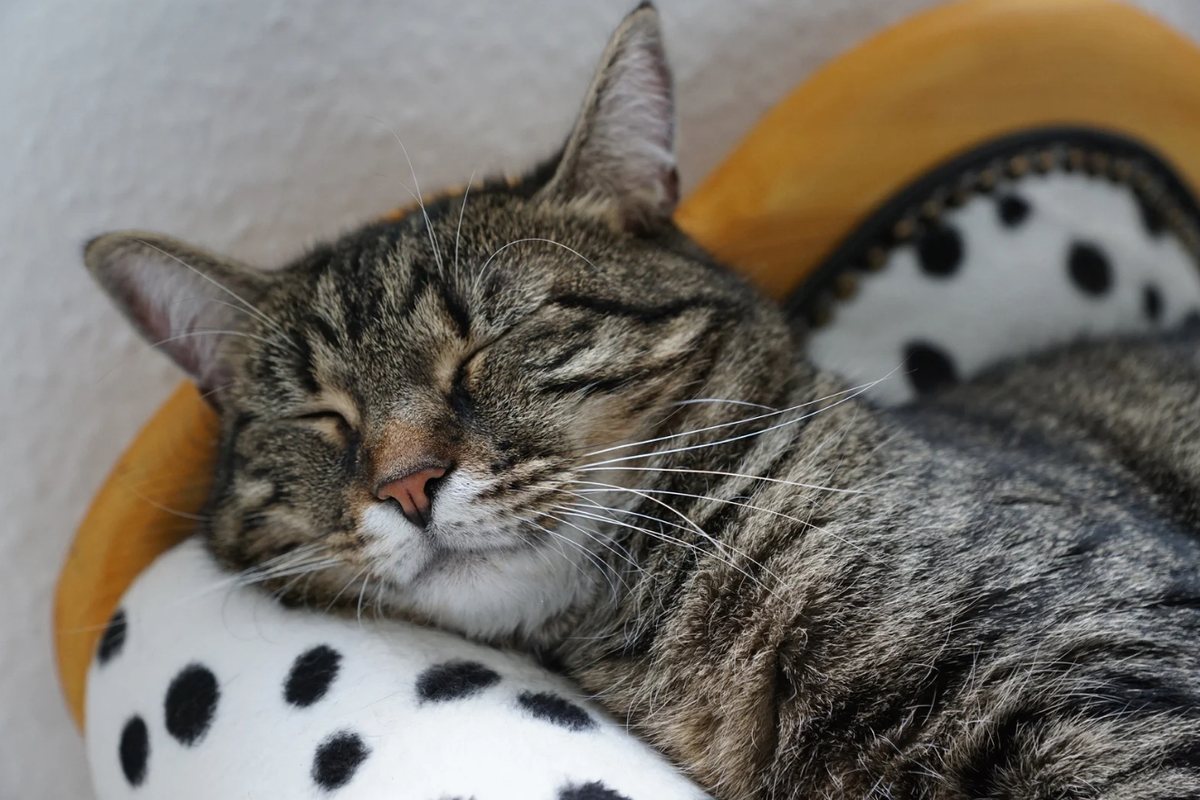
Wherever they already are
Your pet does not need to be moved, lifted onto a table or coaxed out from anywhere. A cat who feels safest under the bed can stay under the bed. A dog who has claimed one particular cushion keeps it.
We work at their level, on the floor if that is where they are, and we take our time getting there.
Afterwards, at home
There is no hurry. Sit with your pet as long as you like. Many families want a lock of fur, a photograph, or a paw print. A paw print keepsake and a memorial certificate are included with every in-home euthanasia visit.
If you have chosen cremation aftercare, we will take your pet with us when you are ready. A stretcher travels with us, and your pet is carried and covered with the same care you would give them. For larger dogs we may need a hand to reach the vehicle, so please tell us in advance if nobody will be able to help.
Children and other pets
Children. Children usually cope better with being included than with being sent away and told nothing. Plain words help. Use died rather than put to sleep, which can frighten a young child at bedtime. We are happy to talk this through with you beforehand.
Other pets. Many households let their other animals come in afterwards to see and smell their friend. Some sniff and walk away, some show no interest, some clearly understand something. Either way it seems to help them, and it takes only a moment.
The days after.
Grief for an animal is real grief, and it does not always behave. It can arrive late, arrive sideways, or arrive with a force that surprises you. The empty spot on the floor at six in the evening is often harder than the day itself.
You are welcome to phone us afterwards with questions, including the ones that start did we get it right. We would far rather answer that call than have you carry it alone.
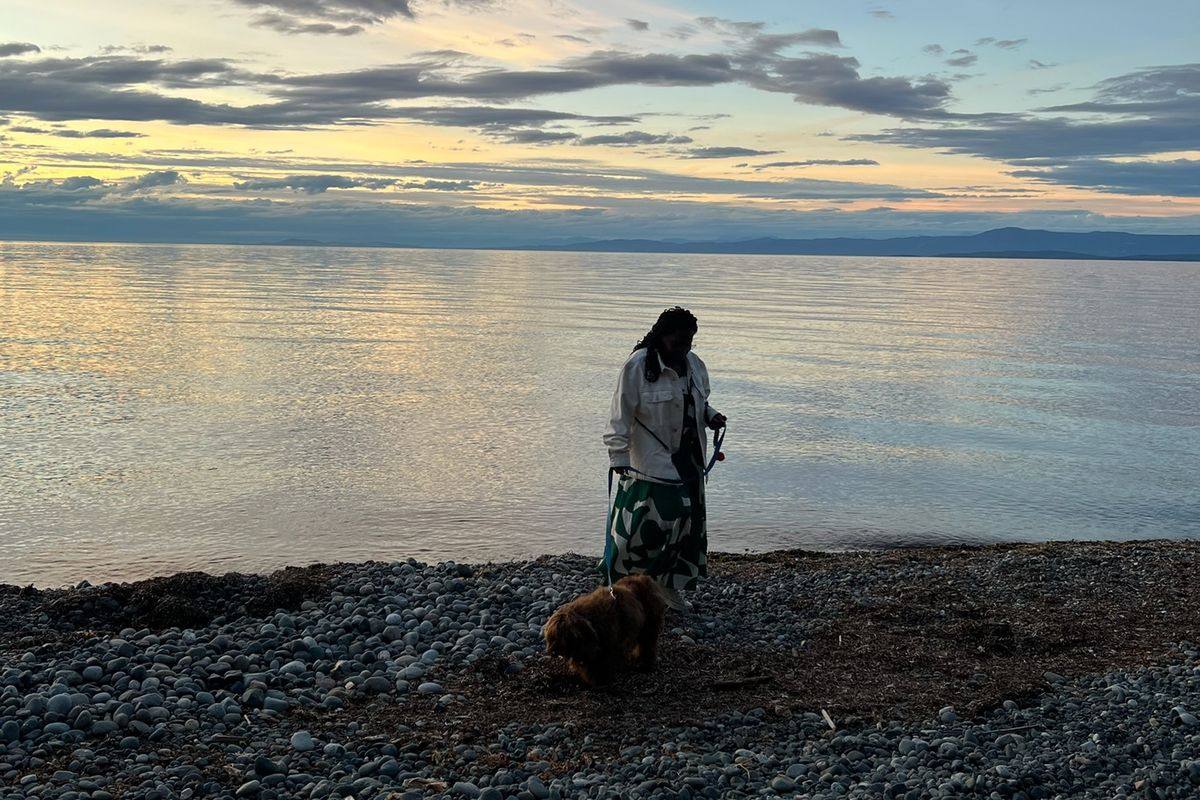
You can call before you are ready to book.
Many families phone simply to ask what happens, what it costs, or whether it is too soon. That call is welcome, and it is free.